




Solid 3-4 day loop for advanced packrafters
The main Mōkihinui has a glowing reputation for paddling (and biking on the Old Ghost Road). The North Branch is more obscure, but is regarded as a great development trip for hard-shell kayakers, who fly in to Johnson Hut. (See the entry on riverguide.co.nz) The North Branch’s character is continuous, with steep boulder gardens through gorgeous granite geology.
With a good track all the way from the Wangapeka Track to Johnson Hut, it’s no surprise that it has caught the eye of Packrafters in lower flow conditions. This ‘B’ loop has all the ingredients for an absolute classic packrafting trip: a manageable shuttle to an aesthetic line on the map, with quality paddling, great scenery and the already-famous main Mōkihinui as the final leg.
Suggested itinerary
- Road end to Belltown Mananui Hut 9km 2.5-3hrs
- Belltown Mananui Hut to Johnson Hut 17km 9-10hrs
- Paddle the Johnson & North Branch (IV) to Mōkihinui Forks Hut 15.5km 3-6hrs
- Paddle the Mōkihinui to the take out (III/IV) 18.5km 3-5hrs
Thanks to Sandra Hyslop for the information and photos for this trip page.
View Larger Topographic Map
Wangapeka Track to Johnson Hut 26km 11.5 – 13hrs
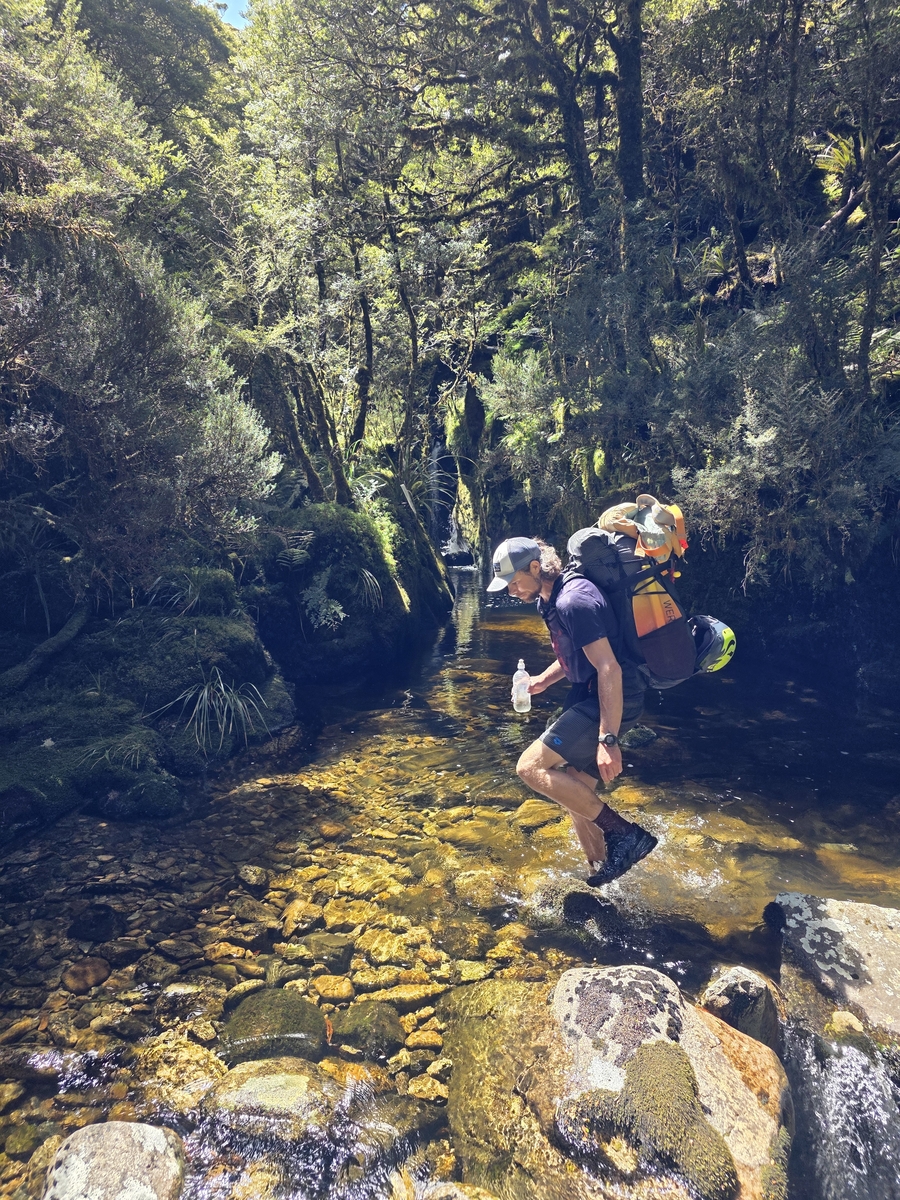
From Little Wanganui, hike up Wangapeka Track for about 2.5-3hrs and spend the Belltown Mananui Hut, because its a pretty big day from here through to the Johnson.
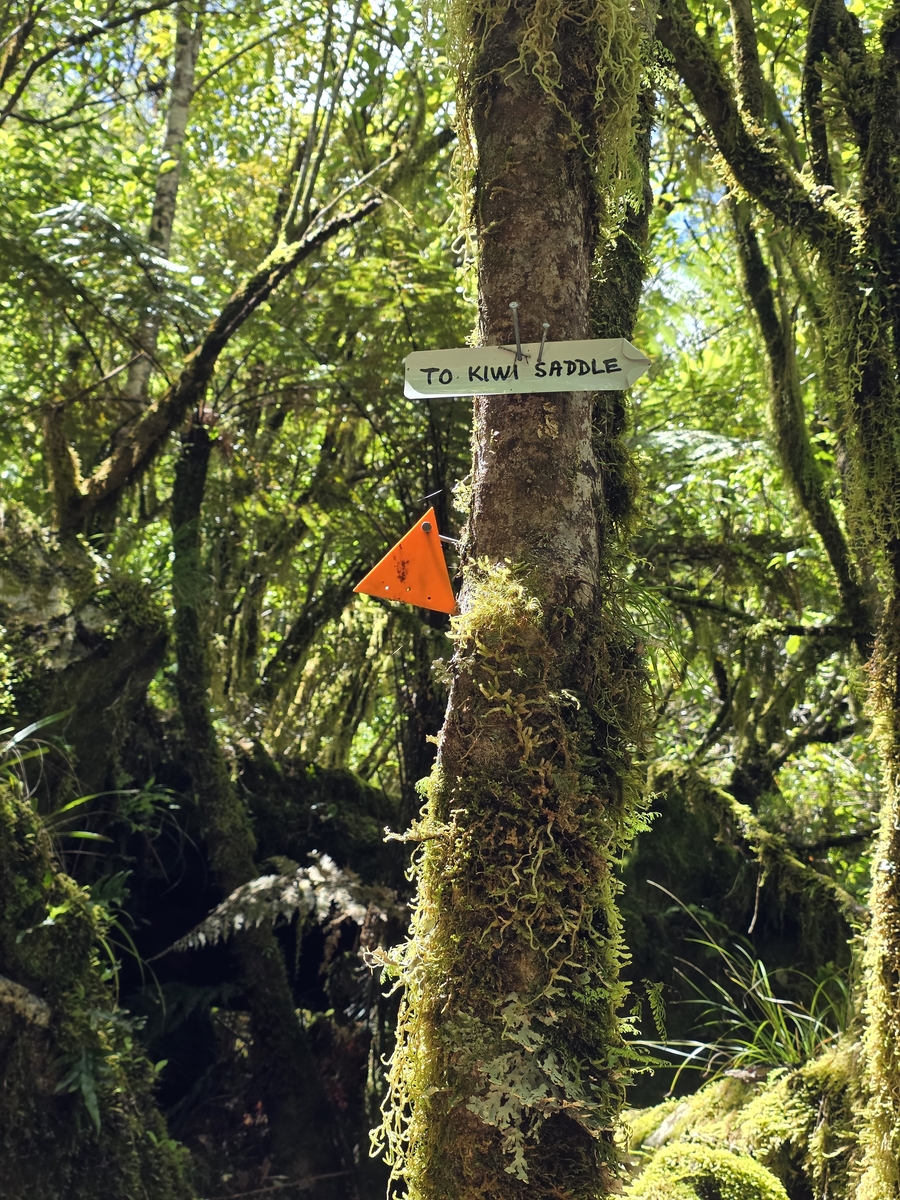
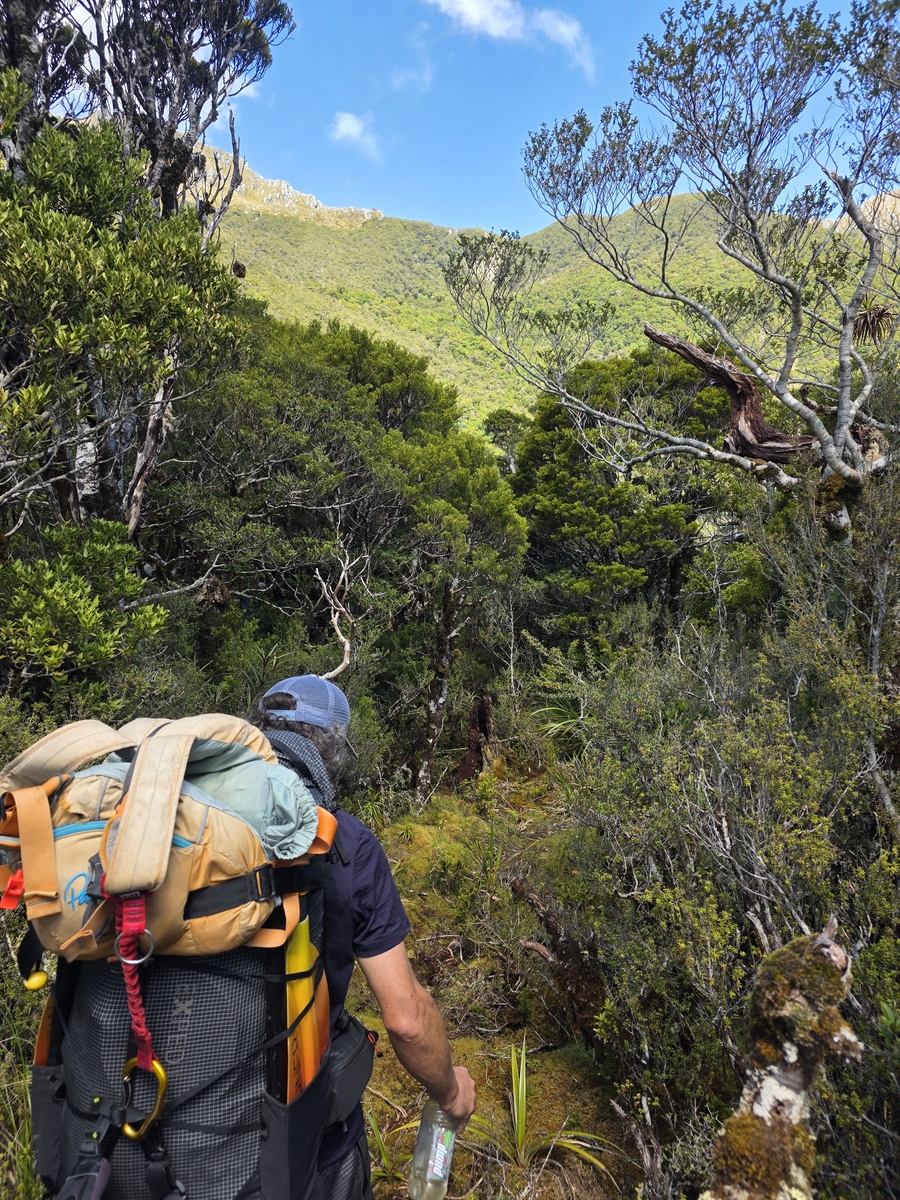
Recent track cutting work by legend Andrew Barker has cut down the time into the Johnson significantly, but anticipate at least 9-10hrs from Belltown Mananui for relatively fit trampers with heavy packs taking breaks.
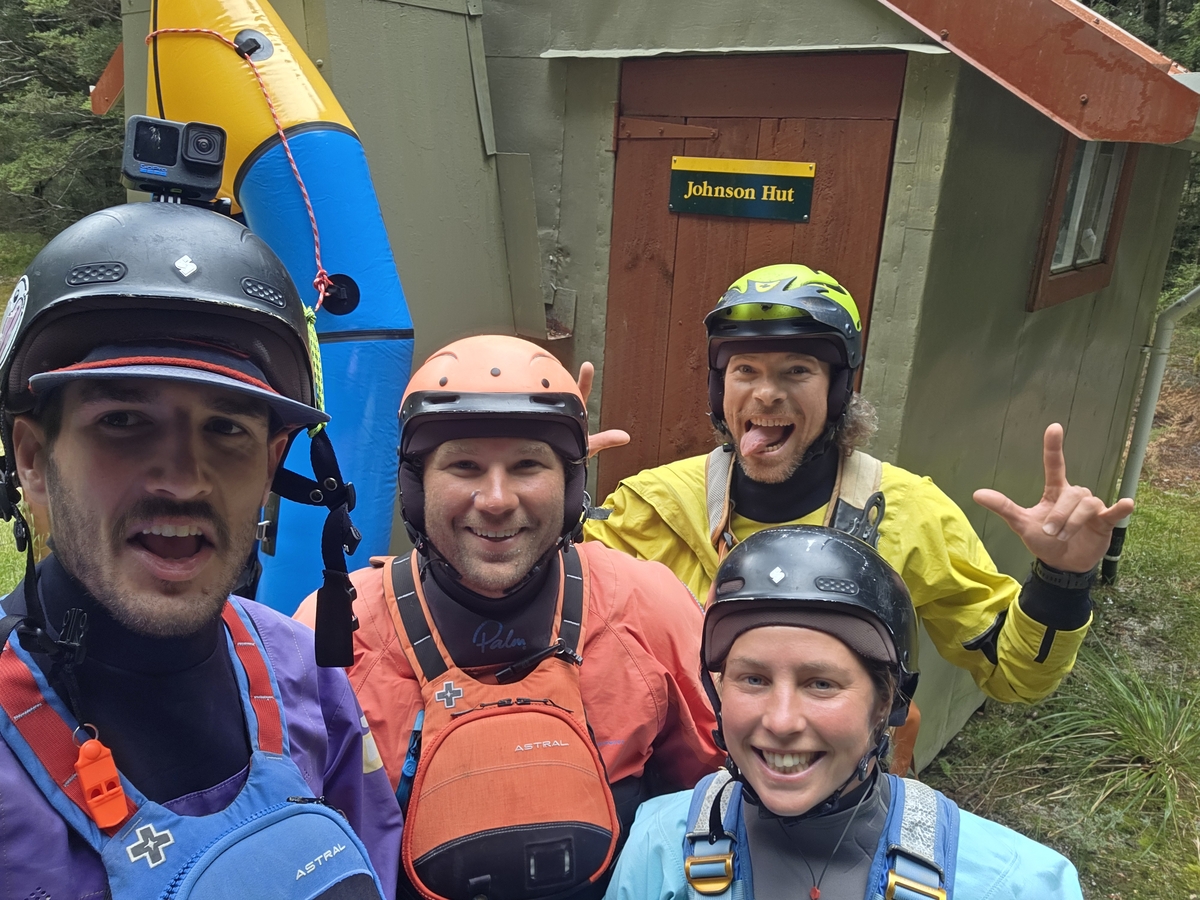
Johnson Hut is an epic 4 bunker with its history written all over the walls.
There is epic camping on the Johnson and North Branch if you don’t want to utilise the huts, but you’ll feel the extra weight on the walk! Sandflies can be pretty vicious in this area so bear that in mind before committing to the tarp biv!
Johnson & Mōkihinui North Branch (IV) 15.5km 3-6 hrs
You can hop on the Johnson River by the hut (maybe with higher flows it would be possible to get on the Johnson further up, but it wasn’t for us). Bump down some steep bouldery rapids, most of which are boat-scoutable. The North Branch drops an average of 20m/km for the first 10km so its reasonably steep.
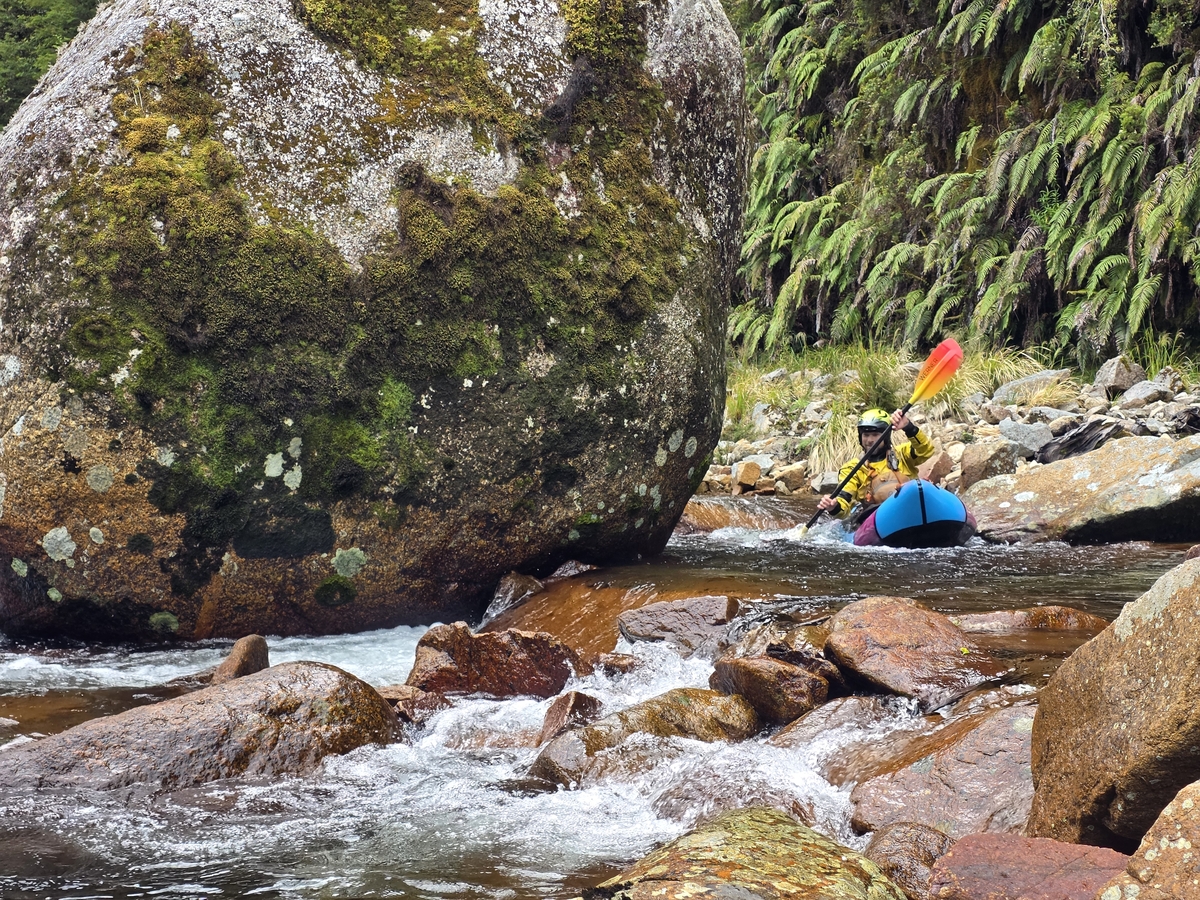
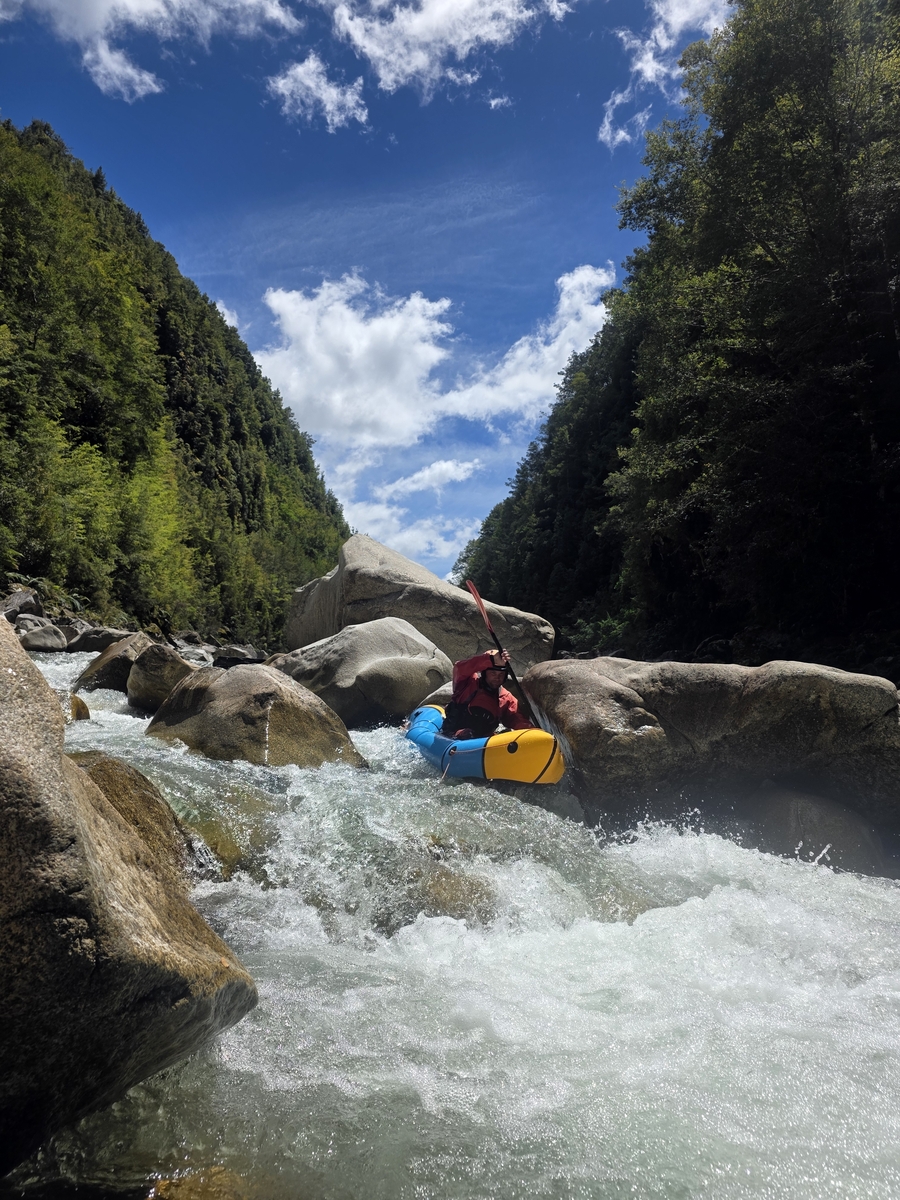
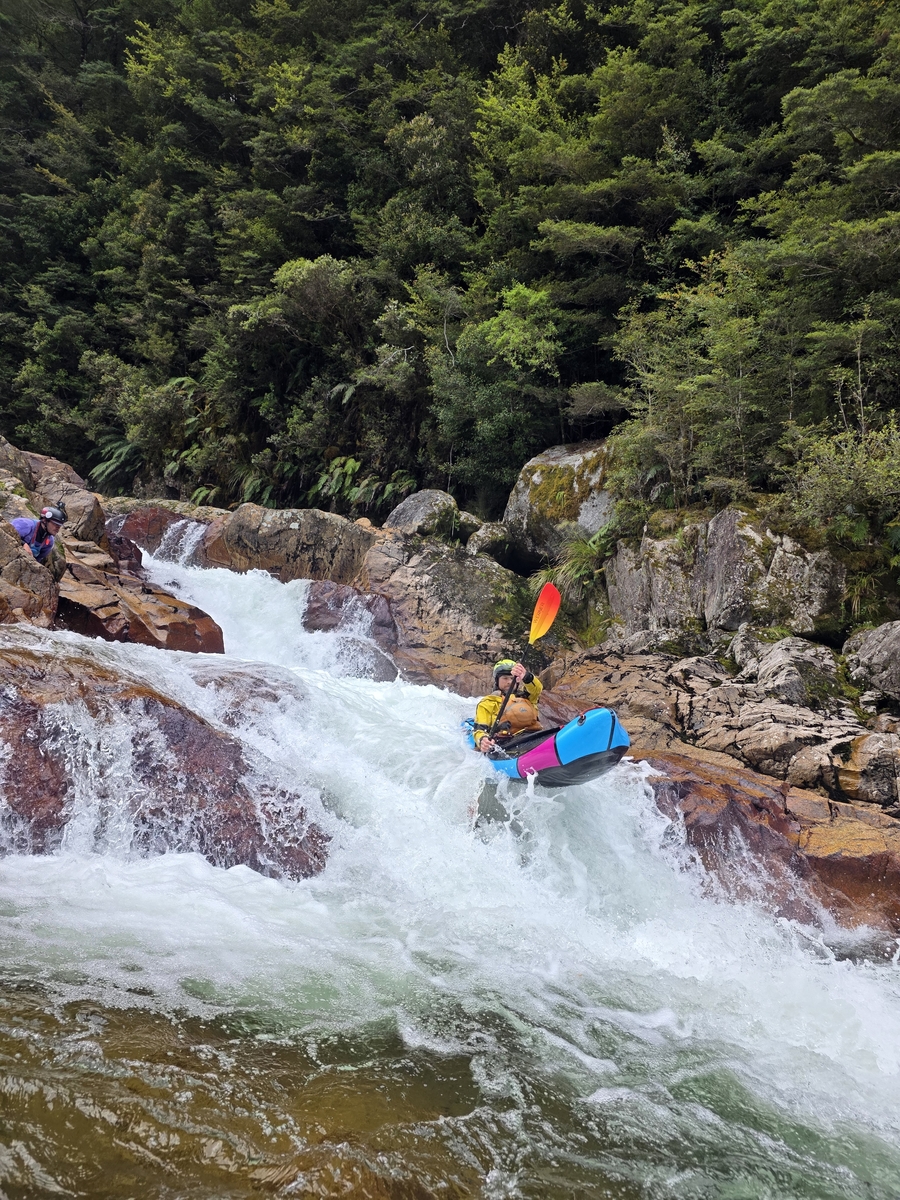
Make sure you keep an eye out for wood and a bigger horizon line heralding what the kayakers have dubbed ‘The Sphincter Tightener’. It isn’t un-runnable, but we didn’t fancy it.
The confluences of the Allen and North Branch Mōkihinui add a good whack more water and you are floating through a stunning landscape, keeping an eye out for Whio and enormous Trout.
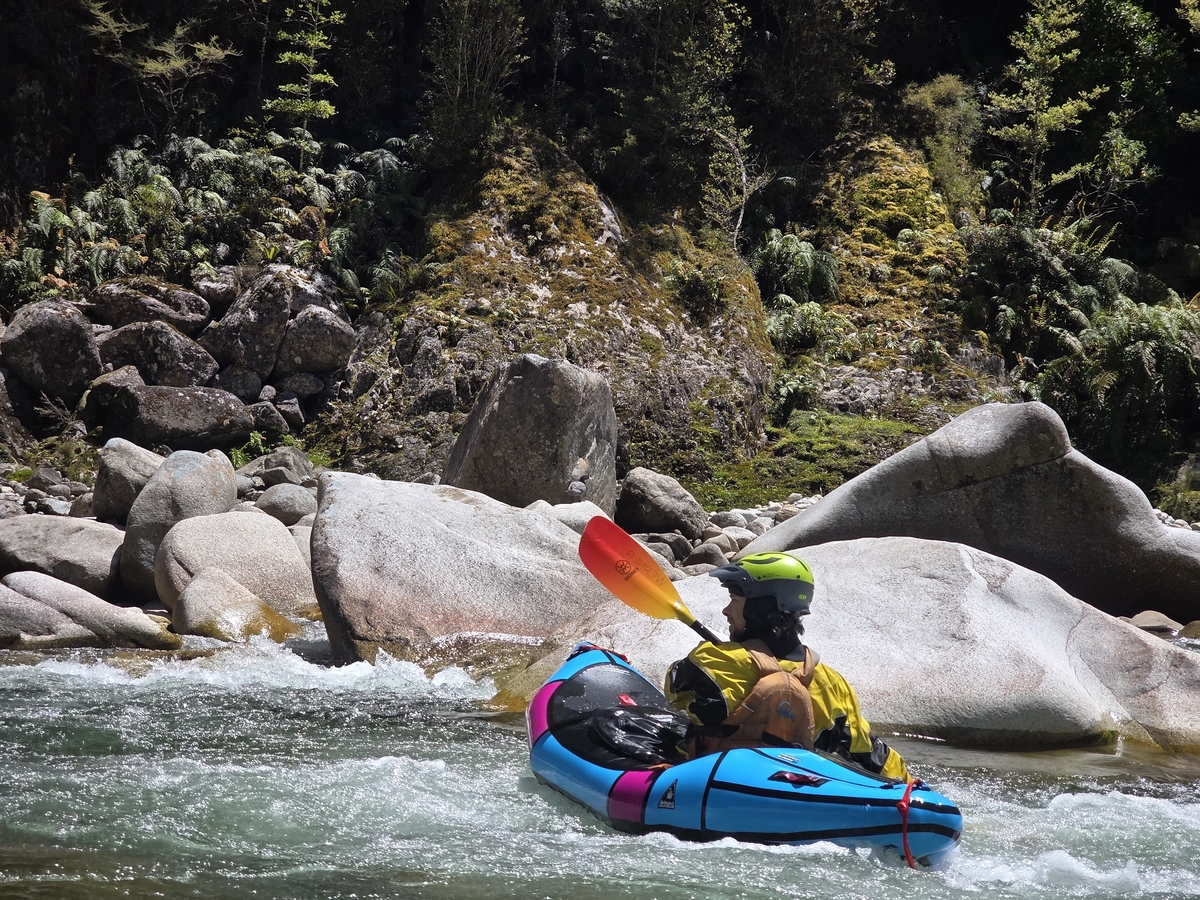
The whitewater is continuous and stimulating – eddy hopping down steep boulder gardens.
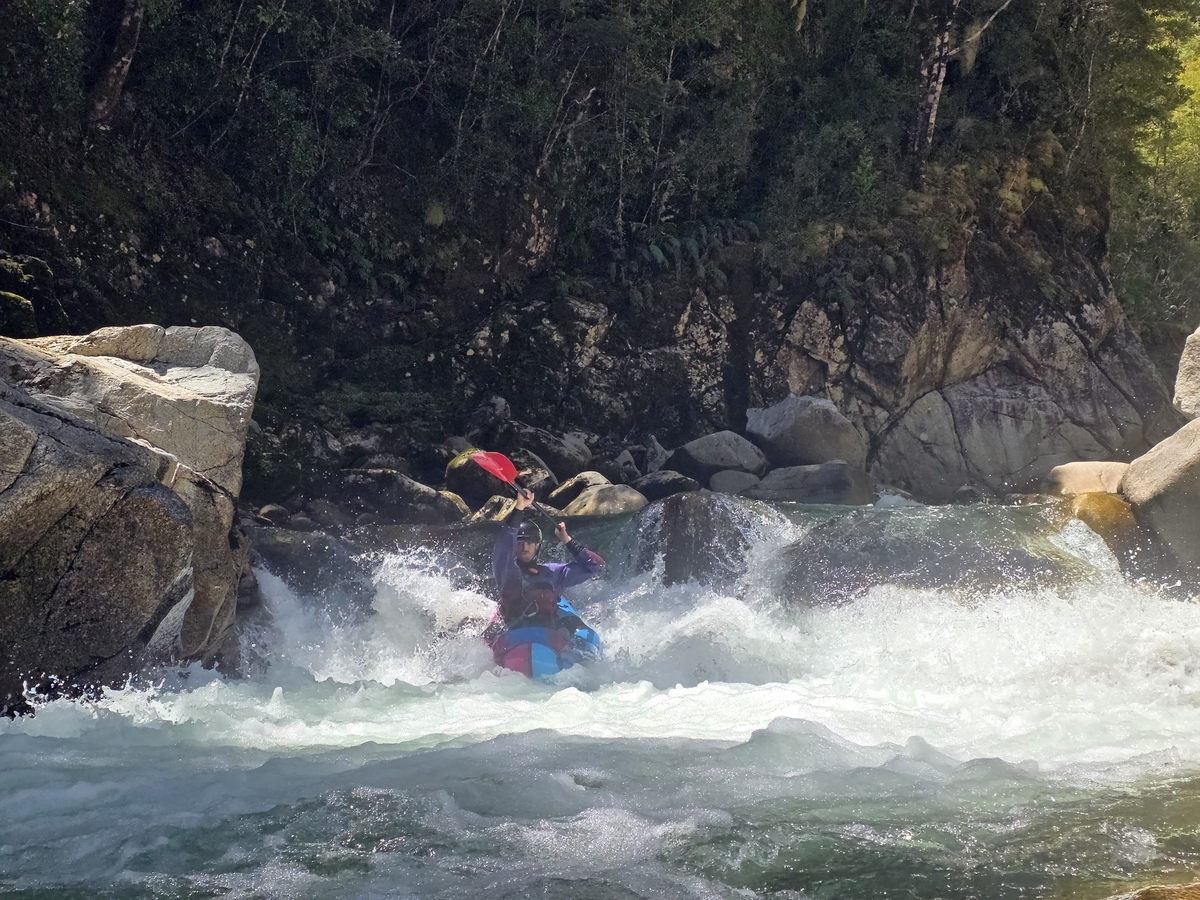
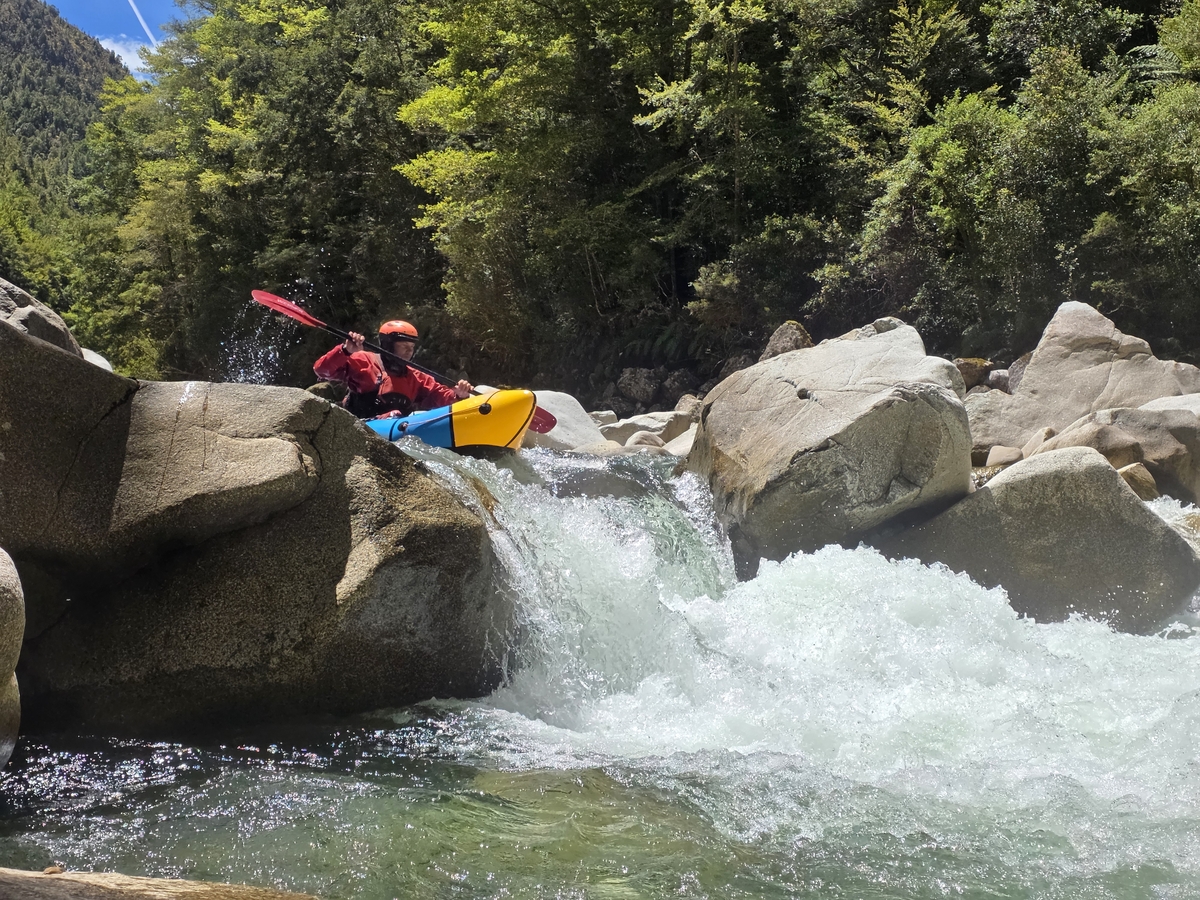
Most is boat-scoutable but there may be the odd bank scout/portage and there are sieves and tree hazards so make sure you’re comfortable with this style of boating if you’re heading in. At paddling flows, everything can be portaged.
As the valley walls ease back and you start to emerge to the flats near the forks, the gradient drops away to flat water, with the occasional class II wave train.
About 3-6hrs from Johnson Hut, you’ll get to the confluence of the South Branch. Paddle/portage UPSTREAM on the South Branch and scramble up the steep (vertical) bank to get to Mōkihinui Forks hut. This cozy 10-bunker doesn’t require bookings, but the popularity of the Old Ghost Road means it’d be unlikely that you’d have it all to yourself. Prepare accordingly and consider a tent.
Or if you’re keen for a big day on the water, carry on down the normal Mōkihinui (II+/IV) section from the confluence.
Mōkihinui (III+/IV) forks to take out – 18.5km 3-5hrs
Read the Mōkihinui (II+/IV) for more information. It’s worth noting that the river volume almost doubles as the South Branch comes in, and the first couple of rapids are a little harder than if you were to put on at Specimen Creek.
Gauge
30-100 cumecs is probably a reasonable range for packrafting groups.
All the photos on this page were from a trip reading 30 cumecs before the group began.
The North Branch goes surprisingly well in low flows – not sure I’d want to be there in a PR at the flows kayakers chase. Go on the drop, not the rise, and log your trips below so we develop a better handle on the right levels.